Books that keep themselves.
Daylight is accounting for small service businesses. It is built so an eligible business can stop using QuickBooks for everyday accounting.
How a month goes
Connect your bank and cards
A read-only link, made through Plaid. Your bank sign-in goes to Plaid and your bank, never to Daylight.
Routine things record themselves
Daylight records what it can support, using the rules you have set and what earlier, similar lines taught it.
You answer a short list
What can’t be settled on its own waits in “Needs you”, in plain words, with what each answer will do. Daylight never guesses at a result it can’t support.
Close the month, hand it on
When a month is done you close it. At tax time your preparer gets the trial balance and general ledger.
What it looks like
These are screens from Daylight’s development build, showing sample data. Nothing here is a real business.
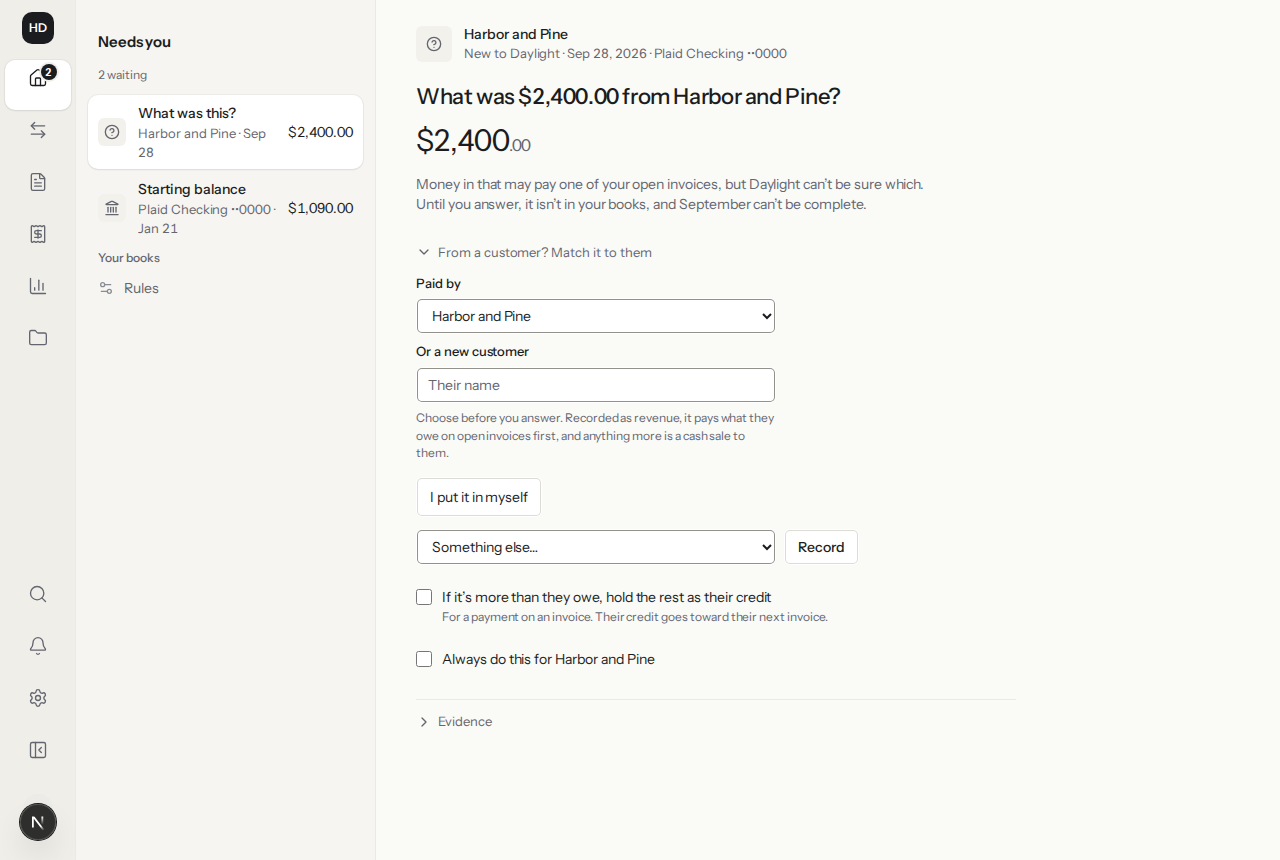
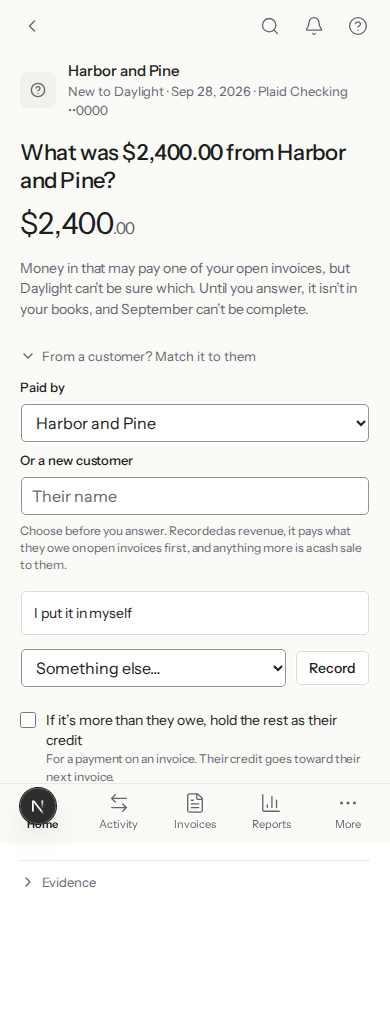
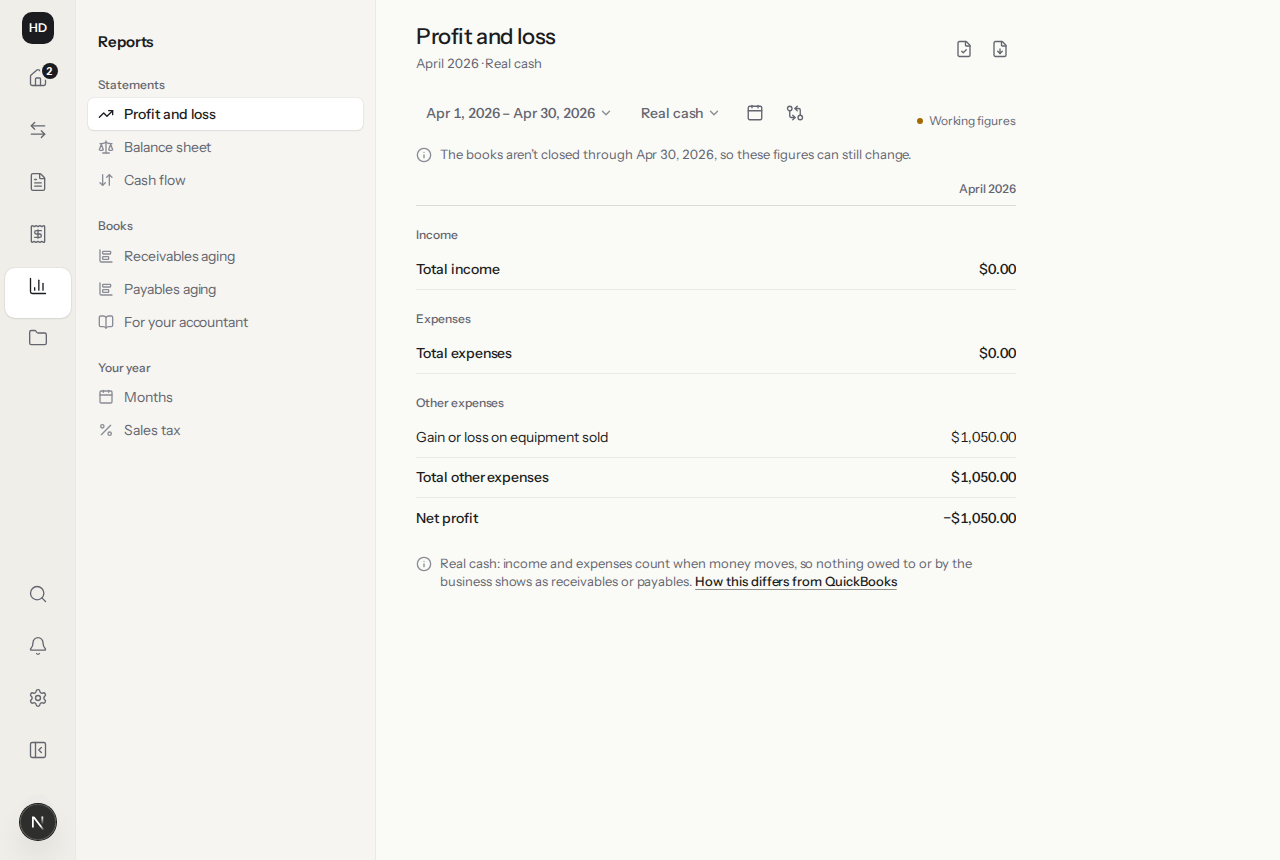
What you can count on
Every figure traces back
Open a number and see the activity, documents and corrections behind it.
Cash basis, done right
Reports on real cash, modified cash or accrual, all from the same records.
You stay in control
Anything Daylight does by itself is announced and can be undone. Posting on its own is off until you turn it on, after a warning.
Your records are yours
An accountant’s access is separate from yours, can be ended by you at any time, and every visit is logged.
For owners and for accountants
Owners see money, people and time: cash first, then profit, without debits and credits. Accountants get a professional workspace across the businesses that have invited them, to review and correct the books, close periods and hand off to tax preparation. The two experiences are separate on purpose.
What Daylight doesn’t do
- It doesn’t prepare or file tax returns, or estimate what you owe.
- It doesn’t run payroll. It can account for payroll you run elsewhere.
- It doesn’t move money, or refund or void anything, on its own.
Not sure it fits your business? See who Daylight is for.